
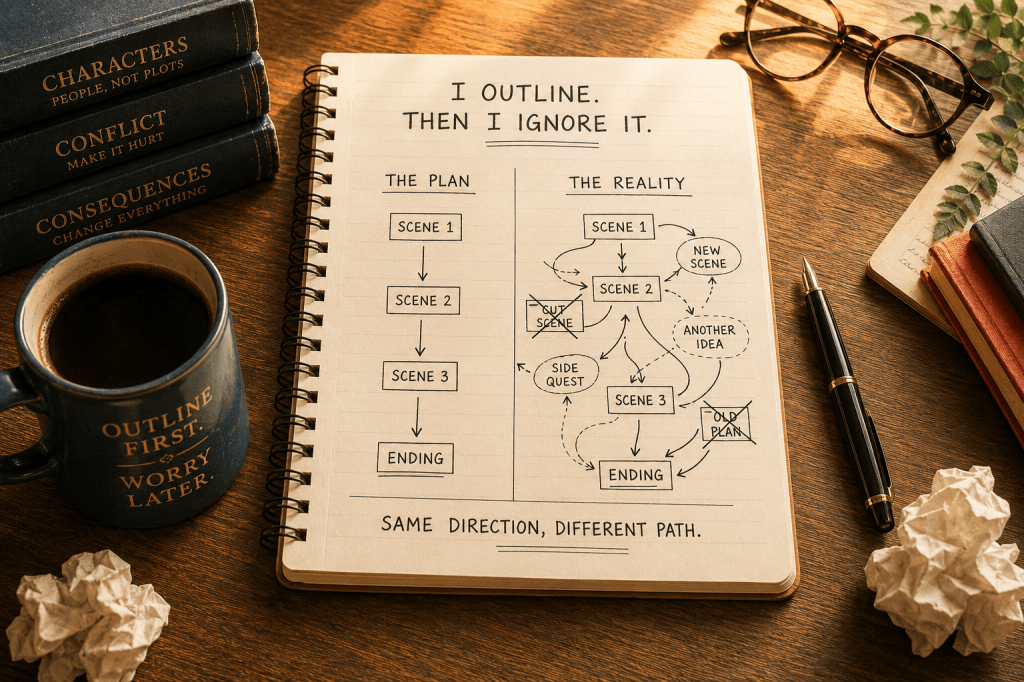
I always make an outline before I start writing. And then, sooner or later, I ignore it.
Not completely. I usually know where the story is going. I know the major turns I want to reach, the things that need to happen, and — more or less — where everyone should end up. But the closer I get to the actual writing, the less useful a detailed plan becomes.
I can usually see about two or three chapters ahead.
Beyond that, things get blurry.
I think in scenes more than chapters. I see a conversation, an argument, someone walking into a room at exactly the wrong moment. Sometimes I know the emotional beat I want before I know precisely how the characters are going to get there. So I sketch out the next few chapters, start writing — and somewhere along the way, the story changes the plan.
A character says something I hadn’t expected.
A scene that was supposed to be short suddenly matters.
Something I planned three chapters ago no longer makes sense because of what happened two pages ago.
And the outline quietly becomes outdated.
There’s a familiar distinction in writing between architects and gardeners — terms George R. R. Martin has used for writers who plan their stories in advance and those who discover them as they grow. Brandon Sanderson also talks about outlining and discovery writing, and about how most writers fall somewhere between the two.
I definitely live somewhere in that middle ground.
I’m basically a gardener who insists on drawing up a blueprint first.
I absolutely need the blueprint. I like knowing where I’m going. I like knowing which walls are supposed to exist and approximately where the doors should be.
I just reserve the right to move all of them once I get there.
This is probably why my outlines become less and less trustworthy the further into the future they go.
The next scene? Fairly clear.
The next two or three chapters? I have a decent idea.
Twenty chapters from now? I know what needs to happen. I may even know exactly where everyone needs to be when it happens.
How they get there is another question.
And I’ve stopped worrying about that.
And I’ve learned not to force it.
Because some of my favourite moments have appeared precisely because I deviated from the plan. Once the characters are actually inside a scene, with everything that has happened to them up to that point, sometimes the choice I originally wrote in the outline simply isn’t the choice they would make anymore.
So I change it.
Then I change whatever comes after it.
And occasionally I stare at my carefully constructed outline and wonder why I bothered making one in the first place.
But I know why.
It gives me direction without deciding every step for me. It means I’m rarely facing a completely blank road, but I can still take an unexpected turn when the story gives me a good reason to.
Somehow, despite all the detours, I usually arrive where I meant to go.
Just not by the route I planned.


Leave a Reply